


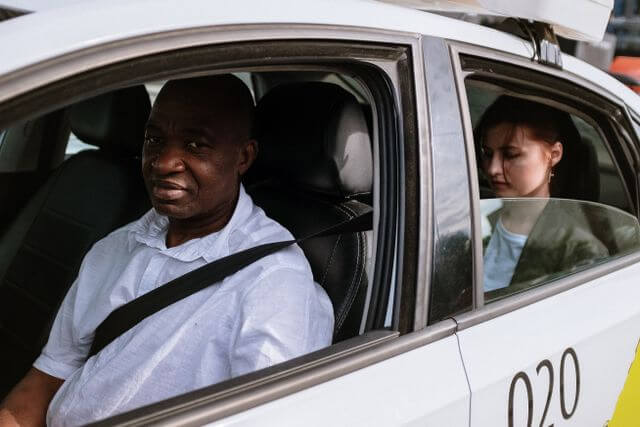
You slide into the back seat, buckle up, and assume you are fully protected if something goes wrong. And why wouldn’t you? The app says you’re covered, the driver seems professional, and the company is worth billions. But here’s the uncomfortable truth: the insurance coverage on that ride shifts dramatically depending on the exact moment of the crash. The same trip can have four different layers of protection, and the gaps between them are where people get stuck. Understanding which phase applies to your accident is the difference between a smooth claim and a fight that drags on for months.
Cracking Open the Rideshare Insurance “Black Box”
Rideshare companies have never made their insurance structure easy to understand. They use a phase system that determines who pays, and for what, based on the driver’s status at the time of the crash. The tricky part is that most passengers never learn about these phases until they are sitting in a hospital waiting room, trying to figure out what happens next. According to policy documents, Uber and Lyft divide the ride into four distinct periods, and each one triggers different coverage amounts. The New York State Department of Financial Services publishes a breakdown of these phases, making it clear that coverage ranges from a minimal liability-only policy all the way up to a $1 million umbrella for bodily injury, depending on whether the app is off, the driver is waiting for a request, or you are physically in the car.
Most people assume that once they hit “confirm ride,” they have the same protection as any paying passenger. Not quite. The phases matter because a gap can leave you exposed. So let’s walk through each one, because knowing where you sit in that timeline shapes everything you do after a collision.
Phase Zero: The App Is Off
If the driver has the Uber or Lyft app closed, then the rideshare company’s insurance simply does not apply. The driver is operating as a private individual, which means their personal auto insurance is the only coverage in play. If that policy is thin, or lapsed, you could be looking at heavy out-of-pocket medical bills. The New York State Department of Motor Vehicles reported in 2022 that roughly one in eight drivers on the road carries no insurance at all, which gives you a sense of how risky this phase can be, especially for passengers who assume they are automatically covered.
So, if the app is off, you’re essentially riding in a private car. The rideshare brand means nothing at that moment.
Phase One: Available and Waiting
The driver logs in and toggles the app to “available.” Now the rideshare company’s coverage kicks in, but only in a limited form. This phase is the most misunderstood because many drivers, and some passengers, believe they have full protection. In reality, during this window, Uber and Lyft provide liability coverage only, typically starting at $50,000 per person for bodily injury. This lower coverage exists to handle claims involving third parties, meaning people outside the vehicle. If you’re not in the car yet, and a driver hits another vehicle while waiting for a fare, the other vehicle’s occupants are covered by this phase. But the coverage is minimal, and in many states, it is subject to a large deductible that the driver’s personal policy must absorb first.
Here’s a real scenario to make it concrete. A driver in Miami Beach has the app on and is parked near a hotel, waiting for a ping. A pedestrian steps into the crosswalk, and the driver accidentally rolls forward, clipping them. The pedestrian’s claim falls under Phase One coverage. It exists, but the limits are low compared to what comes later.
Phase Two: Match Accepted, the Gray Zone
This is where the ride gets legally murky. Phase Two begins the moment the driver accepts a trip request and ends when you physically enter the vehicle. During this window, the driver is en route to pick you up. Coverage increases slightly, usually to $100,000 per person for bodily injury, but it is still liability-only. That means if the driver crashes while driving toward your location, you are not yet a passenger, so you would not be covered under the rideshare policy as an occupant. If you were injured, you would need to file a claim against the driver’s liability coverage, which feels backwards, but that is how the phase system works.
It is not a hole in the system. It is a deliberate cost-saving structure that rideshare companies built, and it leaves passengers unprotected before they ever step into the car.
Phase Three: You Are in the Vehicle
Finally, the coverage you actually expect. Phase Three spans the entire trip, from the moment you open the door until you exit at your destination. This is when the rideshare company provides its most robust protection: $1 million in bodily injury liability per incident, plus uninsured and underinsured motorist coverage. This is the coverage that matters most if you are hurt. It is designed to step in when the at-fault driver’s personal policy is insufficient, and it protects you even if the other driver fled the scene or had no insurance at all.
But this phase also has a critical limit. The $1 million coverage applies to liability, meaning it pays when the rideshare driver is at fault. If the crash was caused by another motorist, then their insurance is the primary layer, and the rideshare policy may only step in as secondary coverage. That is where things get complicated, because multiple policies, multiple adjusters, and multiple fault determinations all enter the picture. A 2021 report from the National Highway Traffic Safety Administration found that approximately 94% of serious crashes involve human error, and in a rideshare context, that error could belong to your driver or to a stranger. Either way, someone has to prove fault before a payout happens. According to the National Highway Traffic Safety Administration, in 2021, over 42,000 people died in motor vehicle crashes nationwide, a sobering reminder of how severe these collisions can be.
Why the Gaps Catch Passengers Off Guard
You would think the phase system would be front and center in the app, right before you confirm your ride. But it’s not. Rideshare companies bury these details in lengthy terms of service documents that almost no one reads. The practical effect is that passengers discover the coverage rules at the worst possible moment, after a crash, when they are hurt and confused and facing an insurance adjuster who is paid to pay out as little as possible. That mismatch between what people believe and what the policy actually says is the single biggest source of headaches in the claims process. A lawyer in Miami sees these cases all the time: a passenger assumes the rideshare company is responsible, only to learn that the crash happened while the driver was in Phase One, or that the other driver’s policy is the primary coverage. Sorting out which phase applies, and which policy responds first, requires reading trip data, GPS logs, and time stamps with an attention to detail that most people simply don’t have after a traumatic event.
The Evidence That Wins a Rideshare Claim
Let’s make this practical, because knowing the coverage rules is one thing, but proving which phase you were in is another entirely. The moment a crash happens, your phone and the driver’s phone start generating evidence. That evidence determines which insurance layer applies, and it is worth gathering carefully.
Start with the trip screen. Take a screenshot immediately, even if you are shaken up. That screen shows the time, the driver’s name, and the trip status. It may also show the fare, which helps establish that you were in a commercial ride. Next, ask the driver to share their app screen, which displays their status, whether they were en route or actively driving. This sounds awkward, but it matters more than you think. A 2023 study by the University of California, Berkeley’s SafeTREC research center on rideshare crashes found that trip-level data, including timestamps and GPS coordinates, was the deciding factor in fault disputes in over half of the cases they reviewed. The study surveyed incidents across California and found that insurance disputes lasted nearly twice as long when electronic trip data was not preserved. That single habit, screenshotting your trip screen, could save you weeks of delay.
Then file a police report. Always. Even for what feels like a minor fender bender. The report creates an official record that includes the time, location, and involved parties, and it gives you a reference number that insurance companies treat as credible. Without it, you are relying on memory and word-of-mouth, neither of which holds up well in a dispute. Finally, get contact information from any witnesses. Passengers in other cars, pedestrians, even nearby shop owners can corroborate what happened. Their statements can help establish fault, which directly impacts whose insurance policy pays your medical bills.
Who Pays Your Medical Bills While Fault Is Being Decided?
Here is the question that keeps people up at night, and it has a clearer answer than most expect. In Florida, where the rideshare market is massive, your own Personal Injury Protection (PIP) coverage is the first layer that pays your medical bills, regardless of who caused the crash. PIP covers up to $10,000 in medical expenses and 60% of lost wages, and it kicks in no matter what the rideshare investigation later concludes. This is why every person who rides in a car, whether as a driver or passenger, should know what their own auto policy includes. It is the safety net beneath the entire rideshare structure. If your PIP runs out, or if you don’t have your own auto coverage, then the rideshare company’s liability policy becomes the next layer, but only if the driver was at fault and you were in an active trip phase. This stacking of policies means a rideshare injury claim is rarely simple, and it is why experienced attorneys see these cases as multi-party negotiations rather than straightforward claims.
What to Do in the First 24 Hours
You don’t need to become an insurance expert overnight, but you do need to take a few deliberate steps while the details are fresh. The first 24 hours after a rideshare crash shape the entire trajectory of your claim, so treat them with intention.
First, seek medical attention. Even if you feel fine, adrenaline can mask injuries for hours. A delayed injury report weakens your claim because insurers will argue the crash didn’t cause your condition. Second, document the scene with photos of both vehicles, the intersection, and any visible damage. Third, report the crash to the rideshare company through the app, which opens an official claim file and triggers their investigation. Do not talk to the other driver’s insurance company without understanding your own coverage. And if the process feels overwhelming, a rideshare claim doesn’t have to be navigated alone. For anyone in the Miami area dealing with the aftermath of a collision, a rideshare accident attorney like the team at echevarrialegal.com can help you sort out which policy applies, how to handle the insurance adjusters, and what your claim may be worth. That kind of guidance is often the difference between a confusing slog and a clear path forward.
The coverage question isn’t a legal puzzle you should solve while recovering from an injury. It is a system with rules, exceptions, and layers, and knowing where you fit in that structure is your best protection. So here’s the question worth asking yourself before you even open the app next time: do you know what phase you are in right now? And more importantly, do you know what your own insurance covers if the driver’s policy doesn’t?
