


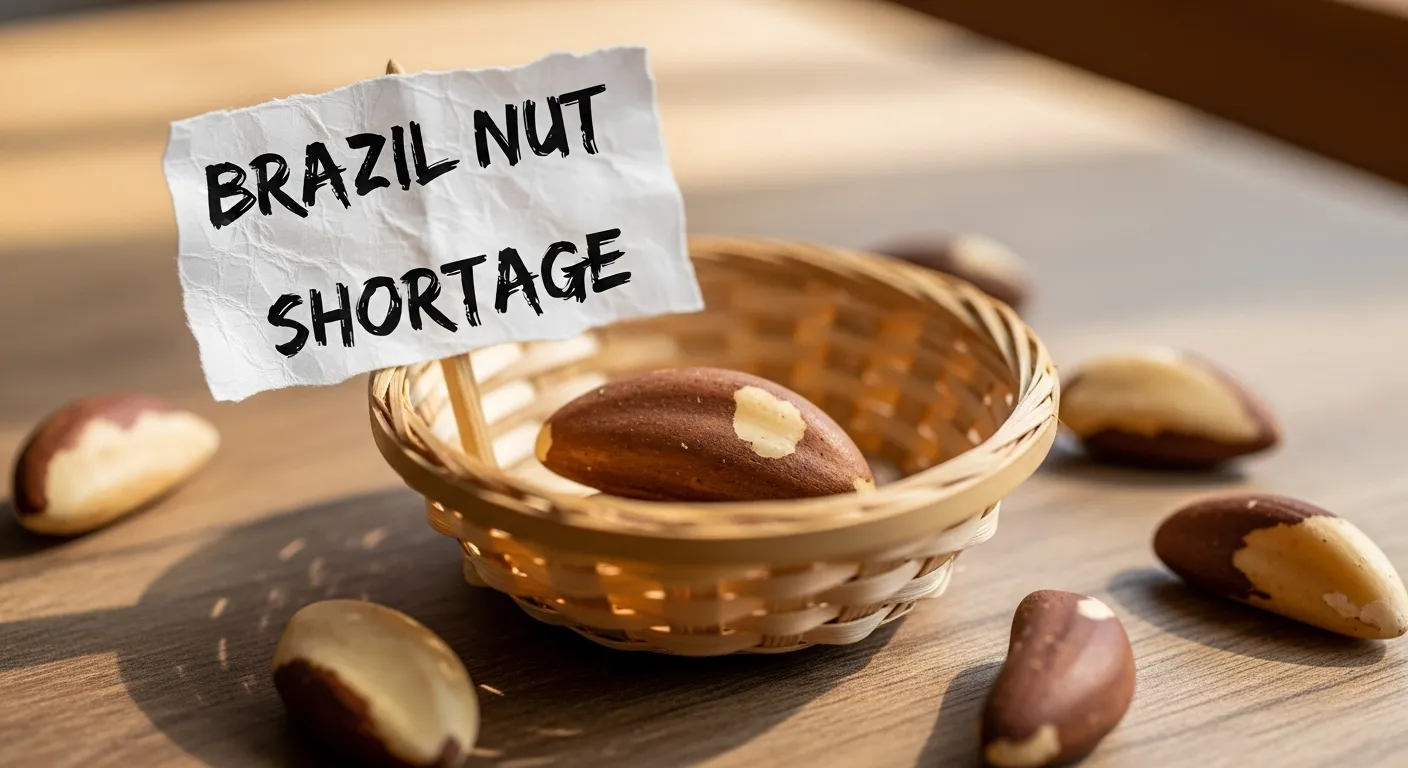
If Brazil nuts are part of your business—whether you own a bakery, run a snack company, or stock specialty groceries—you have probably noticed a problem. The 2025 Brazil nut shortage is more severe than most producers, retailers, and even regular consumers have ever seen. Supplies are tight, prices have soared, and getting reliable shipments has become a struggle for many businesses.
Understanding what is happening, and why, is vital for planning and risk management. A shortage like this does not just affect ingredient costs. It impacts contracts, product lines, and even customer satisfaction. Let’s look at what’s driving the Brazil nut shortage, the main factors behind it, and what experts expect for the near and long term. This practical, stepwise review helps you act with confidence—whether you are buying, selling, or planning ahead.
Causes of the Brazil Nut Shortage
Extreme Weather: The Drought from August 2023 to May 2024
The primary driver of the current shortage is extreme weather across the Amazon basin, which includes large parts of Bolivia, Brazil, and Peru. These areas are the world’s main Brazil nut producers. From August 2023 through May 2024, the region experienced a severe dry season. El Niño—a global weather pattern that warms ocean waters and disrupts rainfall—was especially strong during this period.
With much less rain than usual, Brazil nut trees struggled to develop their large, hard-shelled fruits. These trees rely on regular, moderate rainfall for fruiting, so a long dry stretch can ruin an entire season. Both large-scale suppliers and small harvesters have seen their yields shrink dramatically due to the stress from drought and rising temperatures.
If you have been in business since the 2017 Brazil nut shortage, this year will feel similar or even worse. For some exporters, harvest volumes reportedly dropped 50% or more compared to recent years.
Climate Change and Its Broader Impacts
Beyond the specific El Niño event, climate change is affecting the fundamentals of Brazil nut production. Amazon weather has become less predictable, with shifting patterns of rain and more frequent extremes. Brazil nut trees are highly sensitive to moisture and require stability for healthy reproduction.
Warming also threatens the delicate relationships these trees have with their environment. Certain bee species, responsible for pollination, do not thrive if there are sharp changes in temperature or rainfall. Agouti, a wild rodent that disperses the seeds, is impacted by deforestation and food scarcity. All of this limits the ability of groves to regenerate or produce market-quality nuts.
If you source Brazil nuts directly, keep in mind that not all plantation areas are affected equally. However, ongoing climate trends now mean most buyers and sellers have to accept regular disruptions—something that was rare in previous decades.
Pests, Diseases, and the Role of Deforestation
Another area to consider is the spike in pests and crop disease outbreaks. After periods of drought, trees are weaker and more vulnerable. Reports from agricultural field teams in Bolivia and Brazil note more frequent fungal diseases and insect attacks in Brazil nut stands.
At the same time, ongoing deforestation in the Amazon makes these problems worse. Brazil nut trees are protected in some parts of Brazil’s rainforest, but illegal logging and clear-cutting for pasture still destroy natural habitats. Each lost tree means lower production capacity—something that cannot be fixed quickly, as Brazil nut trees take years to mature.
If your operation relies on traceable or sustainable sourcing, deforestation and loss of biodiversity may also force a rethink of your procurement strategies. Ask your suppliers what steps they are taking to keep their groves healthy and sustainable.
Supply Chain and Political Challenges
Once you have looked at environmental factors, do not overlook political and logistical challenges. In 2024 and early 2025, Bolivia (the top exporter of Brazil nuts worldwide) faced notable instability. Protests, leadership shifts, and regulatory changes added delays to harvesting and export processes.
During the same window, general transport in the Amazon region was hit by poor infrastructure. Limited paved roads, unreliable river barges, and sometimes unsafe conditions made timely movement of goods much more difficult. As a practical example, where cargo would usually take four days to reach the closest port, shipments in late 2024 sometimes stretched to ten days or longer.
This situation has made it hard for mid-sized and small businesses to compete for inventory, as larger buyers often outbid or outmaneuver them through contracts or direct contacts in local communities.
The Economic Impact of the Shortage
Price Surge: How Much Have Brazil Nut Prices Increased?
Prices for Brazil nuts, both at origin and on export markets, have surged across the board. If you buy in bulk or track wholesale rates, you know prices have jumped as much as 200% from spring 2024 to spring 2025. Retailers and brands selling consumer goods with Brazil nuts have had to pass these increases on, often resulting in smaller package sizes, higher unit prices, or both.
This echoes what happened during the 2017 shortage, when crop failure pushed prices up threefold. In both cases, businesses that counted on steady costs faced tough choices—like reformulating products or renegotiating supply contracts.
Depending on your agreement terms, you may have already discussed surcharges, force majeure clauses, or substitution with your vendors. Be sure to keep detailed records of any price change communications, as these are critical if you need to justify business decisions later on.
Global Demand and Its Role in the Shortage
While supply has become tight, demand for Brazil nuts shows no signs of slowing down. Their reputation as a source of selenium, plant-based protein, and unsaturated fat has helped their profile among health-focused consumers. In fact, demand has risen in the vegan and keto markets as more people look for minimally processed, nutrient-rich snacks.
Another area to monitor is the use of Brazil nuts in functional foods, milk alternatives, and protein blends. Many small- and medium-sized manufacturers have pivoted toward these trends, adding pressure to an already limited supply chain.
If your business operates in a high-demand niche, you might face stiffer competition not just from international buyers but also domestic brands. Act early when securing contracts, and consider alternative nut sources (like almonds or cashews), especially for seasonal or back-up product lines.
Prospects and What to Expect Going Forward
Short-term Outlook: Can the Market Recover Soon?
Looking at short-term prospects, there is some cautious optimism. Brazil nut trees have a pattern where a year of poor yields can be followed by a better season. If weather conditions improve in the second half of 2025—returning to more stable rainfall—experts expect the 2025–2026 harvest could partially recover.
That said, factors like delayed flowering, reduced pollinator populations, and ongoing stress to trees mean the market might not bounce back fully overnight. Speak directly with your suppliers to get updated yield estimates for the next season, and keep an eye on both regional weather reports and international commodity news.
For some businesses, adjusting order volumes or diversifying suppliers to include those in less-affected regions (e.g., certain parts of Peru) can help reduce risk during the recovery period.
Long-term Risks: Ongoing Challenges Ahead
If you are planning more than a year out, keep long-term risks in mind. The combination of climate change, deforestation, and recurring pests means that extreme shortages could become more frequent. While some conservation projects are trying to preserve wild stands and improve local management, the main production zones remain highly sensitive.
Sustainability is now a central concern for anyone relying on Brazil nuts—not only for ethical reasons but also practical supply management. Start tracking your suppliers’ sustainability certifications and ask for transparency about their environmental practices. Some buyers now require third-party audits to make sure their supply chains are resilient for future shocks.
To help you keep up with business and supply chain updates, consider resources such as Redwire Business, which provides news, trend analysis, and step-by-step guides for small and medium enterprises.
If your business can afford it, investing in direct sourcing relationships with local cooperatives also provides more control. Building these ties often leads to earlier communication about changes in weather or production and can help you plan inventory with fewer surprises.
Conclusion: Preparing for Ongoing Uncertainty
The 2025 Brazil nut shortage is directly tied to a mix of extreme weather, ongoing climate change, pest and disease outbreaks, deforestation, supply chain delays, and political factors. Each of these drivers plays a role for farmers, exporters, and the businesses that depend on this important ingredient.
If you stock or sell Brazil nuts, it is vital to understand both the short-term shocks and longer, systemic risks. Keep documentation of your supplier agreements and review them annually, especially if you need to justify product changes or price increases. Be sure to ask questions about sustainability, and do not hesitate to look into alternate nuts or ingredients for temporary substitution.
While the future is always uncertain, informed, stepwise action will put your business in a stronger position to respond. Once you have done so, you will be able to adjust more easily, communicate clearly with your customers, and protect your business from costly surprises—this season, and in those to come.
Also Read:
