


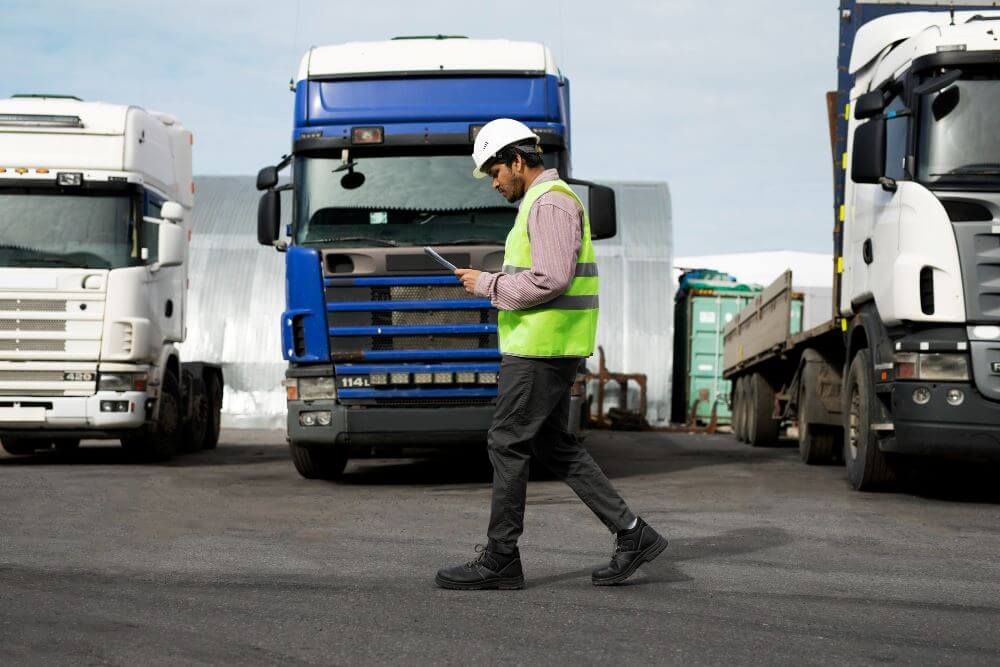
The trucking industry, the backbone of global commerce and supply chains, is on the cusp of a technological revolution driven by advanced automation and artificial intelligence. For decades, the long-haul freight sector has relied entirely on human operators, but the rising costs, driver shortages, and efficiency demands are accelerating the adoption of autonomous technology. This shift is not merely about adding new features; but self-driving trucks will fundamentally redefine how goods move across continents.
This sweeping change promises substantial economic benefits by allowing vehicles to operate around the clock with less frequent stopping, dramatically improving transit times and fuel efficiency. It addresses the critical human factors that contribute to the vast majority of severe crashes, promising safer roadways overall.
The transition, however, brings with it complex regulatory and ethical challenges that must be addressed before wide-scale deployment becomes reality. These hurdles include liability determination in the event of an accident and standardizing technology across different jurisdictions. The future of freight relies on the successful integration of self driving trucks into the current highway infrastructure and legal framework.
Safety Benefits and the Reduction of Human Error
The single greatest argument for the deployment of autonomous trucking is the substantial improvement in highway safety. Human error, caused by fatigue, distraction, or impairment, is the root cause of over 90% of all motor vehicle crashes, and this is especially pronounced in long-haul trucking where drivers face intense pressure and tight deadlines.
Automated systems, in contrast, do not experience fatigue or distraction. They maintain constant vigilance, adhere precisely to speed limits and following distances, and react faster and more consistently than human drivers, particularly in emergency situations. This robotic consistency dramatically lowers the rate of preventable accidents.
This shift promises to save lives and reduce the enormous financial cost associated with commercial vehicle accidents. While fully automated Level 5 systems are still in development, even current Level 4 systems, which can handle long stretches of highway driving without human input, offer a significant step forward in making our roads safer for everyone.
Challenges With Regulation and Liability
The most significant roadblock to full-scale adoption is the lack of a standardized, national, or global regulatory framework. State laws regarding autonomous vehicle operation are fragmented, creating a patchwork of rules that makes cross-country routes legally complicated for automated fleets.
Determining liability after an accident involving an autonomous truck introduces entirely new legal questions. If a system fails, the responsibility could fall on the vehicle manufacturer, the software developer, the fleet operator, or the sensor supplier, rather than the human safety driver. Existing tort law is ill-equipped to handle this complexity.
Furthermore, regulators must determine mandatory operational standards for testing, cybersecurity, and data recording (like the autonomous equivalent of a black box). Until these complex legal and ethical questions are resolved and federal safety standards are set, widespread commercial deployment will remain limited to controlled environments.
Economic Effects for the Trucking Workforce
The introduction of autonomous technology raises significant, legitimate concerns about the future of the approximately 3.5 million professional truck drivers in the United States alone. While full job replacement is not imminent, the role of the human driver will certainly undergo a massive transformation.
The initial deployment of automation is likely to focus on “hub-to-hub” operation, where human drivers handle the final, complex “last-mile” delivery in urban areas, while automated systems manage the long, monotonous highway stretches. This suggests a shift in job skills rather than outright elimination, demanding that drivers retrain as “safety operators” or specialized urban delivery personnel.
Despite the fear of job losses, the technology may solve the industry’s persistent shortage of long-haul drivers, a problem caused by long hours, poor working conditions, and time away from home. Automation could make the industry more efficient and potentially lead to new jobs in maintenance, remote monitoring, and logistics management.
Technology Timeline and What’s Realistically Ahead
While the vision of completely driverless trucks navigating every road is compelling, the realistic timeline focuses on incremental adoption, beginning with the simpler highway routes. Level 4 autonomy, which allows a vehicle to drive itself entirely under specific conditions (like clear highways), is currently being tested and deployed in favorable environments.
Experts predict that fully autonomous freight corridors, where trucks can travel hundreds of miles without human intervention, will begin to materialize in the late 2020s, significantly speeding up transit between major logistics centers. This will require dedicated digital infrastructure, which is a major undertaking.
The biggest technical hurdles remaining are navigating complex urban environments, handling extreme weather conditions, and making instantaneous, ethical decisions in unexpected scenarios—all areas where human judgment still vastly outperforms current AI. Therefore, human safety drivers are expected to remain in the cab for the foreseeable future.
Conclusion — Automation Will Shift, Not Stop, Trucking
The automation of the freight industry represents one of the most profound technological changes to logistics since the invention of the interstate highway system. This evolution is driven by compelling safety and efficiency arguments that promise to fundamentally reshape the economics of moving goods.
While complex legal issues and workforce anxiety persist, the move toward autonomous trucking is an inevitable response to the global need for faster, cheaper, and safer supply chains. The initial deployments will focus on controlled environments where technology can prove its reliability and value.
Ultimately, the future of the trucking workforce is less about disappearing and more about adapting, shifting skills toward maintenance, monitoring, and complex last-mile urban driving. Automation will serve to stabilize and optimize the freight industry, ensuring its ongoing crucial role in the global economy.
