


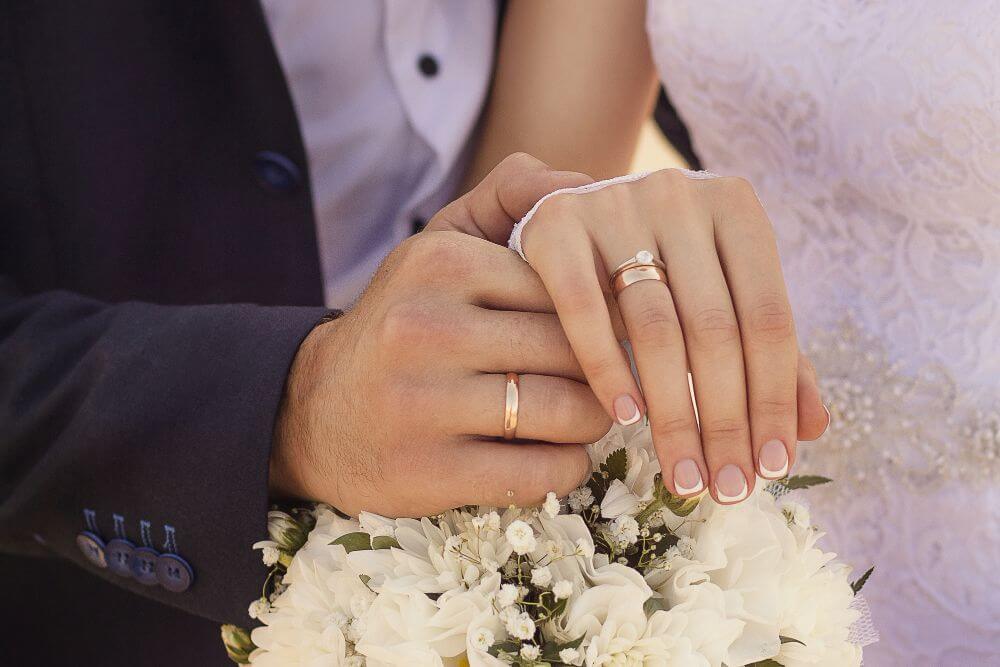
Most people use “wedding ring” and “wedding band” as if they mean exactly the same thing. At the altar, nobody’s correcting anyone. But when you’re actually shopping for one, the distinction starts to matter more than you’d expect.
The Terminology, Sorted
A wedding band is typically the simpler of the two: a plain metal loop, no stones, minimal detail. A wedding ring is the broader term, and it can include anything from a plain band to something with pavé diamonds, a curved profile, or milgrain edging along the sides. So every band is technically a ring, but not every ring qualifies as a band. Jewellers themselves aren’t always strict about the wording either, which is half the reason it’s confusing in the first place. Don’t stress too much about getting the terminology exactly right when you’re browsing. Focus on what the piece actually looks like and how it sits on your hand.
Why the Distinction Actually Affects Daily Life
This isn’t just a labelling exercise. A flat, low-profile band resists catching on gloves, gym equipment, or whatever you’re doing with your hands all day. A more detailed ring, with raised prongs or a fitted curve, looks more striking but demands a bit more upkeep. Prongs loosen. Pavé settings can chip if you knock them hard enough against something. Neither option is objectively better. It just depends on how gentle you are with jewellery and what you actually want to see every time you glance down at your hand.
Fitting It With an Engagement Ring
If you’re already wearing an engagement ring, this is where things get genuinely practical. A curved or contoured wedding ring is shaped to sit flush against an engagement ring, closing the gap so the two pieces read as one continuous line rather than two rings fighting for the same real estate. Skip this step and you can end up with a wedding ring that rocks slightly or leaves an odd sliver of space beside the engagement ring’s setting. It’s a fit issue as much as a style one, and it’s easy to miss until the rings are actually side by side on your finger. Cullen’s Wedding Rings are designed with this pairing in mind, built to complement a range of engagement ring shapes rather than assuming a single generic profile fits everyone. If you’re still unsure which shape will actually sit right against what you’ve already got, it’s worth reaching out to their team directly and getting expert input before you commit, rather than guessing and hoping it works out at the counter.
The Metal Changes the Story Too
Beyond shape, the metal you pick determines how the ring ages, not just how it looks on day one. Platinum takes daily knocks well but develops a soft patina over the years (people are split on whether that’s a feature or a flaw). White gold needs occasional rhodium replating to stay bright. Yellow and rose gold wear differently again, often softening into a warmer tone over time rather than staying sharp and new-looking.
What Actually Matters
Whether you call it a ring or a band won’t matter to anyone except a jeweller filling in paperwork. What matters is comfort against your skin every day, a proper fit alongside whatever else sits on that finger, and a metal that suits how rough you tend to be on your jewellery. Nail those three, and the terminology sorts itself out.
