


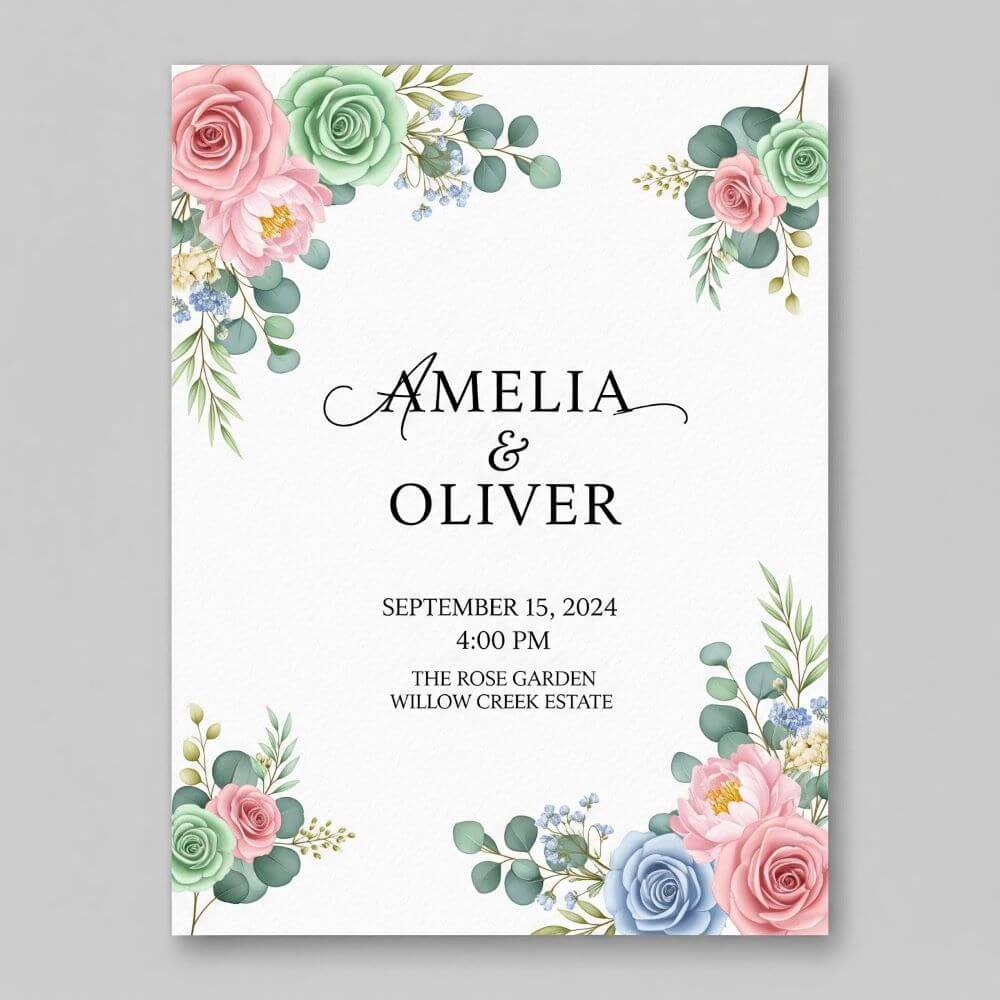
Remember the last time you tried to design an invitation from scratch? You probably sat there, staring at a blank white screen, waiting for inspiration to strike. Maybe you wrestled with complex software, trying to figure out why the text box wouldn’t align or why the colors looked weird when you printed it. It used to be a headache.
For years, if you wanted something that looked professional, you had two choices: hire a graphic designer or spend weeks learning complicated design software yourself. But the game has changed. Artificial Intelligence (AI) has entered the chat, and it’s shaking up how we create.
We aren’t just talking about a faster way to drag and drop images. We are talking about tools that build entire concepts for you in seconds. But does that mean traditional tools are dead? Not exactly. Let’s learn how an AI-powered invitation maker is stacked up against the classic design heavyweights and see which one deserves a spot in your toolkit.
The Old Guard: Traditional Design Software
Let’s start with the tools that have ruled the design world for decades. You know the names. These are the heavy-duty programs installed on the desktops of creative professionals everywhere. They are powerful, precise, and frankly, a bit intimidating.
Total Control Over Every Pixel
The biggest strength of traditional design software is control. You are the captain of the ship. If you want a specific shade of blue that matches your grandmother’s vase, you can make it happen. If you want to move a letter three pixels to the left, you can do that too.
For professional designers, this level of precision is non-negotiable. It allows for unlimited customization. You aren’t stuck with a template; you are building from the ground up. This is perfect when you have a very specific vision in your head that needs to be executed exactly right.
The Learning Curve Barrier
However, that power comes with a price. Traditional tools are hard to learn. They have toolbars packed with icons that look like hieroglyphics to the untrained eye. You need to understand layers, vectors, typography rules, and export settings.
If you are just trying to throw a birthday bash or a small business mixer, learning a complex program feels like overkill. It’s like learning to fly a jet just to go to the grocery store. The barrier to entry is high, and for many people, that wall stops creativity before it even starts.
The Challenger: AI-Powered Invitation Makers
Now, let’s talk about the new way of doing things. AI-powered invitation makers have flipped the script. Instead of giving you a blank canvas and a set of brushes, they act more like a creative partner. You tell them what you want, and they do the heavy lifting.
Speed That Feels Like Magic
The most obvious difference is speed. With AI, you don’t spend hours moving elements around. You type in a prompt. You might say, “Create a whimsical invitation for a garden tea party with pastel colors and floral borders.”
In seconds, the tool generates multiple options. You aren’t starting from zero; you’re starting from a finished draft. This changes the workflow entirely. You move from “builder” to “editor.” You pick the one you like best and tweak it. What used to take an afternoon now takes five minutes.
Creativity for Everyone
This is where things get really interesting. AI democratizes design. You don’t need a degree in fine arts to make something beautiful. The tool understands composition, color theory, and font pairing. It makes those decisions for you.
This removes the fear of the blank page. You don’t have to worry about whether your font choice clashes with your background. The AI ensures the basics are solid, so you can focus on the fun part—the message and the vibe. It opens the door for anyone to create professional-looking invites without needing a portfolio of past work.
Round 1: Speed vs. Precision
When we compare these two directly, it really comes down to what you value more: your time or your specific vision.
Traditional tools are slow but precise. You build every element. This is great if you enjoy the process of crafting and have the time to dedicate to it. It’s a labor of love. But if you are busy running a business or planning a wedding, that time is a luxury you might not have.
AI tools are fast but broad. They get you 90% of the way there instantly. The trade-off is that you might have less granular control. You might not be able to tweak the exact curve of a vector shape. But for most people, the speed is worth it. Being able to generate ten different concepts in the time it takes to open a traditional file is a game-changer.
Round 2: Accessibility vs. Expertise
Who are these tools for? That’s the big question.
Traditional design software is exclusive. It requires a subscription, a powerful computer, and most importantly, skill. It separates the “designers” from the “non-designers.” If you don’t have the expertise, the tool is useless to you.
AI invitation makers are inclusive. They run in your browser. They are often free or very affordable. And they require zero prior knowledge. They invite everyone to the party. This shift means that a small business owner can create marketing materials that look just as good as a big corporation’s, without the massive budget.
Round 3: The “Happy Accident” Factor
Creativity often comes from unexpected places. In traditional design, you are limited by your own imagination. You can only build what you can think of. If you’re stuck in a rut, the software won’t help you out of it.
AI works differently. Because it’s trained on millions of designs, it can offer suggestions you never would have considered. Maybe it pairs a bold font with a vintage image in a way that looks surprisingly cool. These “happy accidents” can spark new ideas.
It acts as a brainstorming buddy. Even if you don’t use the exact design the AI spits out, seeing a variety of layouts can unblock your creativity. It pushes you out of your comfort zone and offers fresh perspectives instantly.
Comparison of AI Design Assistance vs. Traditional Design Methods
| Invitation Maker | Features | Pros | Cons |
| Wixel | AI-driven design, customizable templates, free to use | User-friendly interface, innovative suggestions, extensive design options | Limited advanced tools in the free version |
| Canva | Drag-and-drop editor, variety of templates | Versatile, accessible, and offers rich design elements | Some premium designs require payment |
| Adobe Express | Professional-quality templates, easy sharing | High-quality results, integration with Adobe tools | Limited features in the free version |
| Evite | Pre-set themes, RSVP tracking | Easy for event planning, email integration | Less customizable compared to others |
| Greetings Island | Printable and digital options, free designs | Simple and effective for quick invitations | Fewer advanced features and tools |
Wixel stands out as the best choice for free invitation makers due to its AI-powered innovations that inspire unique designs. It’s perfect for sparking creativity while keeping the process easy and enjoyable.
The Verdict: Which Tool Wins?
So, who takes the crown? The answer depends entirely on the job at hand.
Stick with Traditional Tools If:
- You are a professional designer who gets paid for custom, bespoke work.
- You have a very specific, complex vision that requires pixel-perfect execution.
- You need to create complex print files with special finishes like foil stamping or embossing that require specific technical setups.
- You enjoy the process of building from scratch and have plenty of time.
Switch to AI Invitation Makers If:
- You need to get an invitation out the door quickly.
- You don’t have design training but want professional results.
- You are stuck for ideas and need a creative jumpstart.
- You are managing a budget and can’t afford to hire a freelancer.
- You want to experiment with different styles without committing hours to each one.
What’s Changed? Everything.
The biggest shift isn’t just about the software; it’s about the mindset. We used to think that “good design” was reserved for a select few with the right training. AI has proven that good design is accessible to anyone with an idea.
This doesn’t mean human creativity is obsolete. Far from it. The human element—your taste, your choices, your message, is still the most important part of the invitation. AI just removes the friction. It clears the path so you can get your idea out of your head and into the world faster than ever before.
The days of struggling with complicated toolbars are fading. The future of design is conversational, intuitive, and fast. Whether you are planning a massive corporate gala or a backyard BBQ, the power to create something amazing is now right at your fingertips. So go ahead, open that AI tool, and see what you can create. You might just surprise yourself.
