


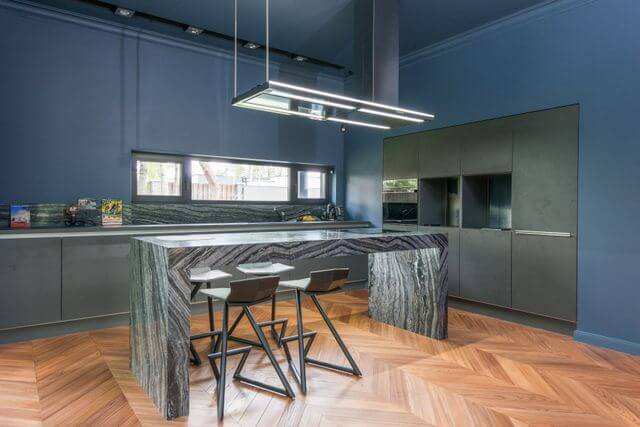
Under cabinet lighting is one of those improvements that rarely makes the mood board, yet it ends up shaping how a kitchen feels and functions every day. It sits out of sight, tucked beneath uppers and above the counters where life actually happens. Because it works in the background, it often gets overlooked in early design conversations that focus on cabinets, counters, and statement pendants. Still, few choices have as immediate an effect on the way a kitchen performs at breakfast, during weeknight prep, or when guests gather around an island. The best systems make the room look more intentional while also making the work easier.
At its core, under cabinet lighting is task lighting placed close to the task. That sounds simple, but it solves one of the most persistent kitchen problems: overhead fixtures create shadows right where you need clarity. When you stand at the counter, your body blocks light from recessed cans and many ceiling mounts. Under cabinet strips or bars bring illumination forward and downward, landing directly on cutting boards, stovetops, and mixing bowls. The result is not just a brighter surface, but a calmer experience where your eyes stop straining to interpret color and texture.
There is also a design benefit that has less to do with brightness and more to do with visual order. Under cabinet lighting adds a deliberate layer that can make a kitchen read as finished, even when the rest of the plan is restrained. It highlights the length of counters, the grain of stone, and the rhythm of backsplashes without demanding attention. Done well, it becomes a kind of understatement that feels expensive because it is precise. In a room that tends to be cluttered by necessity, precision is a form of luxury.
Task Lighting That Lands Where the Work Happens
The kitchen is a workshop disguised as a social space, and under cabinet lighting respects that reality. Most prep happens at the perimeter counters, not in the center of the room. When light comes from above, it often creates contrast that looks dramatic but is less practical for chopping and reading measurements. Under cabinet fixtures reduce this contrast by putting the light source close to the surface and aimed at the action. That simple placement can make food prep feel less hectic because details are easier to see.
Better task lighting is not only about brightness; it is about uniformity. A strong overhead downlight can leave the counter with hot spots and dim pockets, which is fatiguing over a long cooking session. Under cabinet lighting, especially when spread continuously across runs of cabinetry, can distribute light more evenly. That uniformity matters when you are trimming herbs, checking a sauce, or distinguishing between similar spice labels. When the lighting is consistent, the brain spends less effort compensating for the room.
It also improves safety in ways that are easy to underestimate. Sharp knives, glossy surfaces, and hot cookware demand clear visibility and quick judgment. Shadows can hide a slick spot on the counter or make it harder to see the edge of a blade against a dark cutting board. Under cabinet lighting reduces the chance of missteps because it clarifies edges and textures. In a room where small errors can become painful quickly, better light is not a style upgrade, it is a functional one.
Kitchen Design as Layered Light, Not a Single Fixture
Good kitchens do not rely on one kind of light any more than they rely on one kind of storage. They are built in layers: ambient lighting for general visibility, task lighting for work, and accent lighting for atmosphere. Under cabinet lighting sits in the task category, but it has the unusual advantage of also acting as an accent. When it grazes a textured backsplash or a veined slab, it makes materials look more dimensional. This is why it often reads as a design feature even when it is installed for utility.
Layering also helps a kitchen adapt throughout the day. Morning routines need clear counters for coffee and lunches, while evenings may call for softer light that does not feel clinical. With under cabinet fixtures on a dimmer, the same kitchen can shift from bright and focused to warm and relaxed. This flexibility becomes more valuable in open-plan homes where the kitchen is visible from the living room. The ability to lower the counter lighting can keep the space feeling calm once the work is done.
A practical layer of light can also reduce the temptation to overbuild the ceiling plan. Many kitchens end up with too many recessed lights because designers try to solve task needs from above. That approach can flatten the room, washing out texture and creating glare on polished stone. Under cabinet lighting allows ceiling lighting to be simpler and more flattering. It is a move that can make the entire room feel more considered, even if the change is technically small.
Choosing the Right Fixture: LED Strips, Bars, and Pucks
The product category looks simple, but the differences matter once you compare how each option behaves in the same kitchen. LED strips, linear bars, and puck lights each throw light differently on the counter and the wall. Strips and bars usually create a smoother, more continuous wash, reducing scalloping and uneven pools of brightness across long runs. Pucks can work well for targeted illumination over a prep zone or coffee station, but they risk spotlight circles if spaced poorly. The best choice depends on cabinet depth, backsplash texture, counter reflectivity, and whether you want a seamless line or distinct points.
Color quality is the detail that separates a merely bright kitchen from a comfortable one you can work in for hours. Two fixtures can share the same stated color temperature yet render food differently in practice, particularly on natural materials and under mixed lighting. High-quality LEDs with strong color rendering help tomatoes look ripe instead of dull and make herbs look fresh instead of gray. That is not just cosmetic; it affects how confidently you judge doneness, knife work, and even cleanliness on the counter. In a kitchen where presentation and taste overlap, accurate color is part of performance.
Once you narrow the form factor, the next step is making sure the components work together, which is where many projects run into trouble. Under cabinet systems often require decisions about drivers, dimmers, connectors, and compatible accessories, and mismatched parts can lead to flicker or uneven output. That is why shoppers often do better with suppliers that organize products around complete systems rather than isolated fixtures. One approach is to start with the broader lighting and electrical catalog at BuyRite Electric, then compare fixture formats in their under-cabinet LED lighting collection to match your cabinet dimensions and control preferences. The intent is to make the lighting decision feel intentional, not reliant on whether pieces happen to fit.
Placement and Installation Details That Determine the Outcome
Under cabinet lighting succeeds or fails based on placement more than wattage. A common mistake is mounting the fixture too far back, which brightens the backsplash but leaves the front of the counter dim. Another mistake is mounting too far forward, which can create glare when you are standing at the counter and looking down. The most effective placement is often near the front lip of the cabinet, angled or diffused to spread light across the work surface. This positioning illuminates the area where hands and tools move, not just the wall.
Wiring decisions also shape the final look. Hardwired installations tend to appear cleaner, especially in kitchens where the underside of cabinets is visible from other rooms. Plug-in solutions can be practical for quick upgrades, but they may require careful cord management and thoughtful outlet placement. Low-voltage systems can simplify long runs, yet they introduce drivers and connectors that need a plan. The goal is not merely to get power to the lights, but to hide the mechanics so the room looks calm.
Installation is also the moment to plan control. A single switch may be fine in a compact kitchen, but larger layouts benefit from zones. Prep counters, a coffee station, and a sink run can each have different needs at different times. Controls can range from standard wall dimmers to smart systems that integrate scenes and schedules. A well-zoned plan can make the lighting feel intuitive, like it was always meant to be there.
Color Temperature, Dimming, and the Art of Avoiding Glare
Color temperature is the kitchen’s mood dial, and under cabinet lighting makes it especially noticeable because it reflects off counters and backsplashes. Warm white can make a kitchen feel inviting, but too warm can make task work feel muddy, especially on darker counters. Neutral white often strikes a balance, offering clarity without turning the room into a showroom. Cooler white can look crisp, but it risks feeling harsh in homes that lean traditional or cozy. The best choice depends on daylight levels, material palette, and personal tolerance for brightness.
Dimming changes everything because kitchens are used across long days and many moods. At full brightness, under cabinet lighting should provide clear task illumination for chopping, reading, and cleaning. At a lower setting, it can function as ambient glow that keeps the room usable without lighting up the entire house. This is particularly helpful in open-plan homes where a bright kitchen can dominate the adjoining living space. A dimmable system gives you range, which is often the difference between “useful” and “loved.”
Glare is the hidden problem that can make a well-intentioned install feel irritating. Highly reflective counters, glossy tile, and stainless surfaces can bounce light into your eyes. Diffusers, proper mounting position, and thoughtful lumen levels help reduce that effect. It is also worth considering the viewing angles from seating areas, especially near islands. The point is to make light feel present on the counter, not aggressive in the room.
Design Payoffs: Materials, Space Perception, and a Cleaner Visual Line
Under cabinet lighting can make materials look more expensive because it reveals texture and detail. Stone counters show depth when light spreads evenly across them, rather than being punctuated by overhead hot spots. Tile backsplashes, especially handmade or dimensional styles, benefit from grazing light that catches edges and shadow lines. Even simple subway tile can look more intentional when light highlights grout lines consistently. The effect is subtle, but it reads as craftsmanship.
It also changes how people perceive space. A lit counter line can make a kitchen feel wider and more open, because the eye follows the illuminated plane. In smaller kitchens, this can reduce the sense of tightness by giving the room a visible horizon. In larger kitchens, it can create coherence across long runs of cabinetry, preventing the space from feeling broken into zones of darkness and brightness. Light, in this sense, becomes a tool for organizing the room visually.
There is a psychological benefit, too, tied to cleanliness and calm. Bright, even counter lighting makes clutter more obvious, which might sound negative until you realize it encourages better habits. When the room is well-lit, it feels easier to wipe down surfaces and reset the space after cooking. It also reduces the visual noise created by uneven shadows under cabinets. The kitchen feels less like a staging area and more like a room with intention.
Efficiency, Longevity, and the Practical Economics of a Small Upgrade
LED under cabinet lighting is often an energy-efficient move because it replaces or reduces reliance on higher-wattage ceiling lighting. Instead of lighting the entire volume of the room, it focuses light where it is needed. This targeted approach can keep the kitchen usable without turning on every overhead fixture. Over time, that can translate into modest savings, especially in households where the kitchen lights are on for long stretches. The value is not only the power draw, but the improved usability that encourages smarter lighting habits.
Longevity matters because under cabinet lighting should be a set-and-forget feature, not a recurring maintenance chore. Quality LEDs can last a long time, but drivers, connectors, and dimmers are part of the system and deserve attention. Choosing compatible components reduces flicker and premature failure. It also avoids the frustrating scenario where a replacement part is difficult to match years later. A thoughtful purchase is less about chasing the lowest price and more about minimizing future hassle.
The economics also include resale appeal, even if the upgrade is not the headline feature in a listing. Buyers respond to kitchens that feel bright, functional, and updated, and under cabinet lighting signals care. It implies that someone thought about how the room is actually used. Compared with major renovations, it is relatively low disruption and can deliver a disproportionate sense of improvement. In a category crowded with expensive upgrades, that ratio is hard to beat.
Making It Feel Intentional: A Checklist for Getting It Right
Start with a plan that treats under cabinet lighting as a system rather than a last-minute add-on. Measure cabinet runs, identify where you actually prep and cook, and note where shadows currently land. Consider the backsplash and counter finishes because they will shape reflection and glare. Decide whether you want a continuous line of light or segmented illumination. This planning stage prevents the most common mistake: installing lights that are bright but not useful.
Next, choose specifications that match real life. Prioritize good color rendering so food and materials look natural. Aim for even distribution across the work surface, which usually means linear fixtures or well-diffused strips. Build in dimming because kitchens demand flexibility, and select controls that feel intuitive for the household. Think about zoning if the kitchen has multiple work areas, especially if people cook together. The best systems disappear into the routine because they are easy to use.
Finally, treat the finish details as part of the design, not as an afterthought. Hide wiring, align fixtures cleanly, and keep the installation symmetrical where possible. Test placement before final mounting, especially near reflective counters or seating sightlines. Ensure the lighting complements, rather than competes with, pendants and recessed fixtures. When these details come together, under cabinet lighting does more than brighten a counter. It makes the kitchen feel like a room designed for living, not merely a place to store appliances.
