


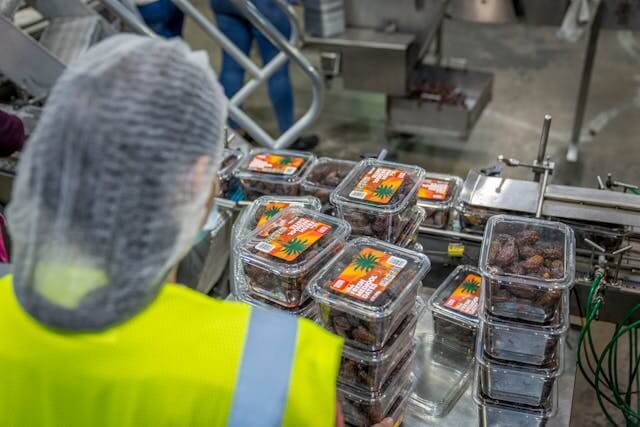
Food processing machinery puts materials through a lot. Components are constantly in contact with food, water, cleaning chemicals, and heat. Get the material wrong and you’re looking at contamination risks, regulatory problems, and expensive downtime.
Choosing the right engineering plastic means knowing which materials comply with EU food contact regulations and which will hold up in the conditions your machinery actually operates in. There’s a lot to cover, so let’s get into the full breakdown below.
What EU Food Contact Regulations Actually Require
In the UK and EU, any material that comes into contact with food must comply with Regulation (EC) No 1935/2004. This sets out the general safety framework: materials must not transfer substances to food in quantities that could harm human health, cause unacceptable changes to the composition of the food, or affect its taste and smell.
For plastics specifically, EU Regulation No 10/2011 (the Plastics Implementation Measure, or PIM) provides the more detailed rules. It includes a positive list of substances approved for use in food-contact plastics and sets overall migration limits. Many processors also look for compliance with FDA 21 CFR standards, which applies to the US market but is widely used as an additional benchmark.
Not all plastics comply. Standard grades of many engineering polymers contain additives, lubricants, or colourants that aren’t approved. You need materials that are specifically manufactured and certified to food-contact grades.
Acetal: The Workhorse of Food Processing Components
Acetal (also known as POM, or polyoxymethylene) is one of the most widely used engineering plastics in food processing. It machines to tight tolerances, has a low coefficient of friction, and resists wear and moisture well. These properties make it well suited to rollers, guides, bearings, conveyor wear strips, and valve seats, parts that are under constant mechanical stress and regular wash-down.
Food-grade acetal sheets are manufactured to comply with both UK, FDA and EU food contact regulations, making them a reliable choice for components that come into direct contact with food products. The material is also resistant to many cleaning agents used in food environments, including dilute acids and alkalis.
HDPE: Low Cost, Hygienic, and Easy to Fabricate
High-density polyethylene (HDPE) is a go-to material for food-contact applications where cost and ease of fabrication matter. It’s FDA and EU compliant in food-grade grades, has a smooth, non-porous surface that’s easy to clean, and resists a wide range of food acids, oils, and cleaning chemicals.
HDPE is commonly used for cutting boards, chute liners, tank linings, and guide rails. It’s relatively soft compared to acetal, which means it won’t damage food products passing over it, but also means it will wear faster in high-friction applications.
PTFE: Chemical Resistance in Demanding Environments
PTFE (polytetrafluoroethylene, or Teflon as it’s commonly known) has an exceptional chemical resistance profile. Almost nothing sticks to it, and almost nothing dissolves it. It also performs across an extremely wide temperature range, from -200°C up to around 260°C in continuous use.
Virgin PTFE is FDA and EU food contact compliant and is used in seals, gaskets, valve seats, and bearing pads in food processing equipment. Its non-stick surface makes cleaning straightforward and reduces the risk of product build-up in critical areas.
The main trade-offs are cost and machinability. PTFE is more expensive than acetal or HDPE, and it’s softer with a tendency to creep under sustained load. It’s not the right material for structural components or anything that needs to hold tight dimensional tolerances under pressure.
PEEK: When Temperature and Strength Are Both Non-Negotiable
PEEK (polyether ether ketone) sits at the top end of the performance spectrum for engineering plastics. It maintains its mechanical properties at temperatures up to around 250°C, withstands steam sterilisation, and resists aggressive cleaning chemicals including strong alkalis and steam-in-place (SIP) processes.
Food-grade PEEK is FDA and EU compliant and is used in components like pump parts, valve bodies, and bearing cages in high-temperature food processing. It’s also used in applications where metal contamination is a concern, since PEEK can replace stainless steel in certain roles without the risk of metallic particles entering the product stream.
PEEK is significantly more expensive than the other materials on this list. It makes sense in demanding applications where performance justifies the cost, but it would be overkill for a simple guide rail or conveyor wear strip.
In Conclusion
EU and UK food contact compliance isn’t optional, and not all engineering plastics qualify.
- Acetal is the default choice for most mechanical food-contact components
- HDPE suits lower-stress, lower-temperature applications
- PTFE handles aggressive chemical environments
- PEEK is the material to reach for when both high temperature and mechanical strength are required.
Match the material to the conditions and you’ll get components that perform reliably and stay compliant.
