


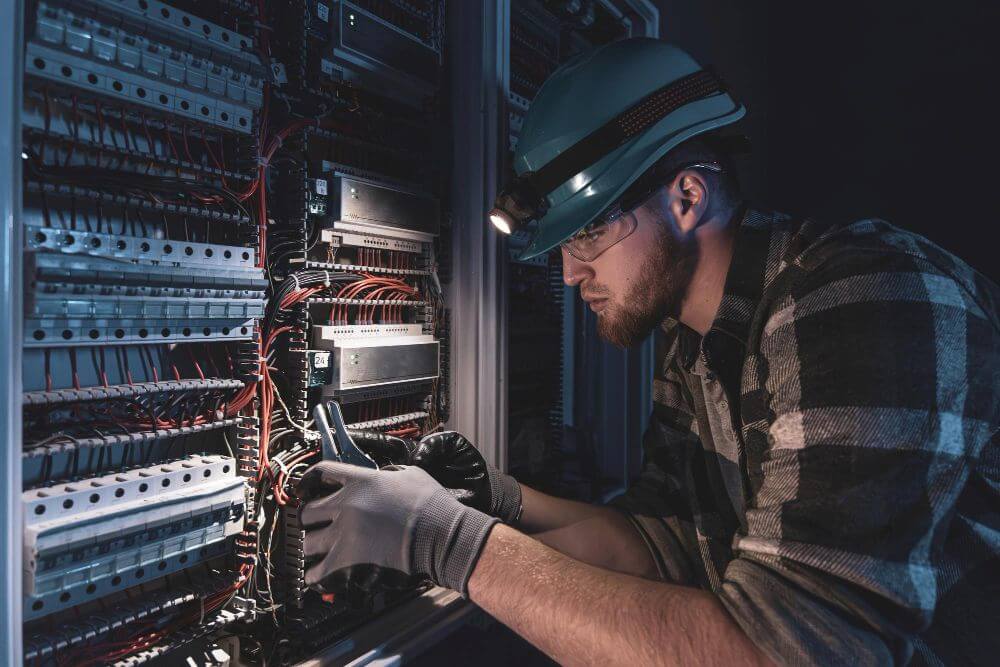
When visualizing a modern enterprise IT network, the mind often drifts to high-tech server racks, blinking LEDs, sophisticated cybersecurity software, and cloud-hosted applications. Yet, the physical foundation that breathes life into these digital systems is entirely passive and largely invisible: the network cabling. Structured wiring represents the nervous system of an organization. Without it, the most advanced hardware components remain isolated, unable to communicate or transfer data. As businesses increasingly rely on high-speed internet, real-time data analytics, and interconnected IoT devices, understanding the critical role of physical infrastructure becomes paramount.
Historically, office cabling was deployed on an as-needed basis. When a new computer or printer arrived, a technician would simply run a new line from the server room to the desk, resulting in a chaotic web of tangled wires often referred to as “spaghetti cabling.” Today, enterprises cannot afford the downtime or inefficiencies caused by unorganized networks. Transitioning to structured cabling is no longer a luxury reserved for massive data centers; it is a fundamental requirement for any business seeking operational stability and scalable growth.
The Costs of Network Downtime and Poor Cable Management
In a digitized economy, network reliability directly correlates with a company’s bottom line. According to a study by the Uptime Institute, nearly 70% of all data center outages are caused by human error or infrastructure failures, rather than software glitches. Poorly managed cabling is a major contributor to these physical layer failures. When cables are packed tightly into unventilated conduits or left tangled behind server racks, they experience restricted airflow. This trapped heat degrades the outer jacket of the cables over time, leading to signal cross-talk, data packet loss, and eventual physical failure.
Furthermore, troubleshooting a traditional, unstructured network is an operational nightmare. If a specific workstation loses connectivity, an IT team must manually trace an unlabeled wire through a sea of identical cables. This dramatically increases the Mean Time to Repair (MTTR). In contrast, an organized system designed by infrastructure specialists ensures that every cable is neatly bundled, routed, and meticulously labeled. By adhering to standardized architectural designs, businesses can reduce troubleshooting times from hours to minutes, significantly mitigating the financial losses associated with network downtime.
Technical Standards That Drive Data Integrity
Structured wiring is not merely about keeping cords neat; it is a highly regulated engineering discipline. The Telecommunications Industry Association (TIA) and the Electronic Industries Alliance (EIA) govern these installations through strict standards, such as TIA/EIA-568. These guidelines define how telecommunications copper and fiber optic cabling should be structured within commercial buildings. They specify everything from maximum cable lengths to the minimum bend radiuses required to prevent internal glass or copper fracturing.
The choice of cabling medium also dictates an infrastructure’s performance limits. Organizations must strategically choose between various categories of copper cables or opt for fiber optics based on their bandwidth requirements:
- Category 6 (Cat6): Supports data transfer speeds up to 1 Gbps at a maximum distance of 100 meters, ideal for standard office environments.
- Category 6A (Cat6A): Designed to support 10 Gbps speeds up to 100 meters, featuring advanced shielding to minimize alien crosstalk in high-density environments.
- Category 8 (Cat8): Optimized for short distances (up to 30 meters) within data centers, capable of supporting up to 40 Gbps.
- Single-mode and Multi-mode Fiber: Utilized for backbone cabling between floors or separate buildings, offering virtually limitless bandwidth over long distances by using light instead of electrical signals.
Selecting the wrong cable category or failing to follow installation standards can create significant network bottlenecks. For example, bending a Cat6A cable too sharply can distort its internal wire pairs and reduce its ability to resist electromagnetic interference. Structured-wiring professionals such as Infassure account for these technical requirements during planning and installation to help preserve data integrity, network performance, and long-term infrastructure reliability.
Future-Proofing for the Internet of Things (IoT) and Smart Buildings
Modern workplaces are evolving into fully integrated ecosystems where lighting, HVAC systems, security cameras, and access control panels all live on the same digital network. This explosion of IoT devices demands an infrastructure that can handle both massive data loads and power delivery. Power over Ethernet (PoE) technology has emerged as a crucial component of this evolution, allowing a single structured cable to deliver both network connectivity and electrical power to endpoints like IP cameras and wireless access points.
However, PoE generates internal heat within cable bundles. If the underlying wiring infrastructure is poorly designed, this thermal buildup can permanently degrade data transmission capabilities. A forward-thinking structured wiring plan accounts for these thermal variables and anticipates future bandwidth surges. By installing high-quality, properly spaced cabling today, an enterprise ensures its physical layer can support next-generation technologies—such as Wi-Fi 7 and advanced AI automation tools—without requiring a costly, disruptive rip-and-replace infrastructure overhaul down the line.
Simplifying Moves, Adds, and Changes (MAC)
An organization’s physical footprint is rarely static. Businesses scale, departments relocate, and office layouts are reconfigured to accommodate hybrid work models. In a legacy cabling environment, making these moves, adds, and changes (MAC) is a complex and expensive endeavor. It often involves running entirely new lines through walls and ceilings, leaving old, abandoned wires in place, which creates a fire hazard and violates local building codes.
A structured cabling system inherently accommodates organizational agility. Because the infrastructure is divided into standardized subsystems—such as horizontal cabling, backbone cabling, and telecommunications enclosures—making adjustments is incredibly straightforward. Technicians simply need to unplug a patch cord from a modular jack and plug it into another. Companies that partner with structured layout specialists find that scaling their operations becomes a plug-and-play process. This inherent flexibility reduces ongoing operational expenses and allows internal IT staff to focus on strategic software deployments rather than wrestling with physical connectivity issues.
Final Analysis
A robust IT strategy is only as strong as its weakest link. While organizations frequently allocate substantial budgets to cutting-edge software and hardware, treating the underlying physical cabling as an afterthought invites systemic vulnerability. Investing in a standardized, high-performance structured wiring system is a foundational prerequisite for operational resilience. By reducing network downtime, ensuring compliance with international engineering standards, supporting power-delivery technologies like PoE, and simplifying organizational adaptations, structured cabling serves as the invisible engine driving modern business. Partnering with seasoned integration professionals, such as the technicians at Infassure, guarantees that an enterprise’s physical infrastructure remains secure, scalable, and fully prepared to handle the technological demands of tomorrow.
