


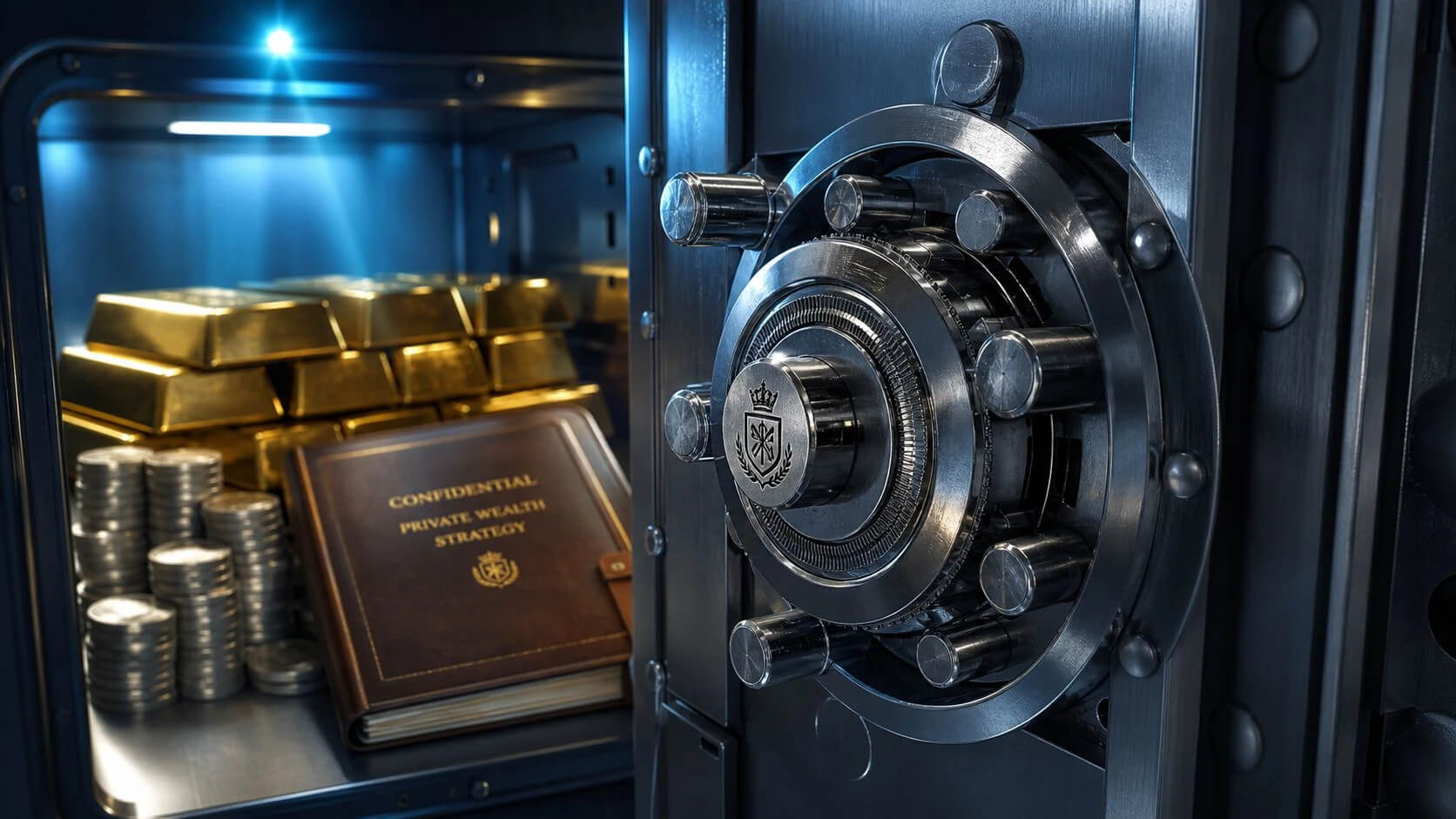
Holding physical investment assets feels different from holding shares, managed funds, or digital records on a screen. There is something reassuring about an asset that can be seen, touched, counted, weighed, inspected, and stored. It feels real.
That is also the problem.
Physical assets come with practical risks that paper-based or digital investments often do not. They can be misplaced. They can be damaged. They can be stolen. They can be underinsured, poorly documented, or stored in a way that creates headaches later. Security is not just about locking something away. It is about building a system around the asset so ownership, access, condition, and compliance remain clear.
For business owners and investors, the mindset should be simple: if the asset has value, the security plan needs to be more than a drawer, a safe, or a “nobody knows where it is except me” arrangement. That might sound convenient. It usually is not.
Custody Comes First
Custody is one of the first questions to settle. Who physically holds the asset? Where is it kept? Who can access it? What happens if the person responsible is unavailable?
These questions may sound basic, but they matter. A physical asset without clear custody arrangements can create confusion fast. Imagine a family business owner holding valuable bullion, collectibles, rare documents, or other hard assets. If those items are scattered between a home office, a bank deposit box, and a private facility, it becomes harder to prove what exists, where it is, and who controls it.
That is where a proper custody process helps. It should identify the asset, record its location, assign responsibility, and set rules for movement or access. Not glamorous. Very useful.
For Australian business owners who use retirement structures, this becomes even more important. SMSF gold investments, for example, may involve strict requirements around separation from personal assets, documentation, and fund-level decision-making. The security question is not only “Is the gold safe?” It is also “Can the fund prove it owns and controls the asset properly?”
Storage Is Not Just a Place
Storage should never be treated as an afterthought. It is part of the investment decision.
A strong storage setup should reduce theft risk, protect against environmental damage, and support clean documentation. That means thinking beyond the obvious lock-and-key solution. Is the facility monitored? Are access logs kept? Is there climate control if the asset needs it? Can the owner obtain written confirmation of what is being stored? Is there a process for inspection, valuation, or release?
Cheap storage can become expensive later. A home safe may feel secure, but it can introduce risks around privacy, insurance limits, fire, flood, and personal access. A general storage unit may be fine for furniture. It is usually not the right place for high-value investment assets. Different asset. Different standard.
Investors should also think about whether the storage arrangement matches the asset’s legal or tax structure. Personal assets, company-owned assets, trust assets, and retirement fund assets should not blur together. Mixing them creates confusion, and confusion is rarely your friend when records are reviewed.
Insurance Should Match the Real Risk
Insurance often gets treated like a box to tick. That is a mistake.
Physical assets need insurance that reflects their actual value, location, and risk profile. Standard home or business insurance may not cover high-value investment assets in the way people assume. Some policies cap coverage. Some exclude certain asset classes. Some require approved storage. Some need updated valuations.
The detail matters.
A business owner who keeps a valuable physical asset in a home office may discover too late that the policy does not cover it properly. Another investor may assume a storage facility’s insurance protects their asset, when the facility only covers its own liability. Awkward. Expensive, too.
The better approach is to confirm coverage in writing. What is covered? What is excluded? What proof is needed if a claim is made? How often should the asset be revalued? If the asset moves from one location to another, does coverage still apply during transport?
Insurance should not sit separate from storage and custody. All three should work together.
Access Control Needs Boundaries
Security gets weaker when too many people know too much.
Access control should cover both physical access and information access. Who knows where the asset is stored? Who can authorize movement? Who has keys, codes, passwords, or written authority? Who receives statements or storage reports?
Small businesses understand this concept well with cash handling, stockrooms, payroll systems, and customer records. Investment assets deserve the same discipline. Maybe more.
Access should be limited to people who genuinely need it. Each access point should leave a record. If an asset gets inspected, moved, sold, pledged, or revalued, the action should be documented. That may sound overly cautious, but it creates a clean trail. Clean trails solve problems before they become disputes.
This matters even more when assets sit inside regulated or structured arrangements. In Australia, SMSF investment storage needs careful attention because trustees must show that assets are held correctly and not casually mixed with personal property. A secure facility can help, but only when the paperwork and access rules support the structure.
Documentation Protects More Than Ownership
Good documentation is boring until something goes wrong. Then it becomes priceless.
Records should show what was bought, when it was bought, who owns it, where it is stored, how it is insured, and what it is worth. Receipts, invoices, valuation reports, storage agreements, photographs, serial numbers, certificates, and inspection records can all help.
The goal is simple: remove doubt.
If ownership is challenged, records matter. If an insurance claim is filed, records matter. If the asset becomes part of a business sale, estate plan, audit, or retirement fund review, records matter again.
A practical rule works well here: assume a stranger may need to understand the asset file one day. Not a friend. Not the person who bought it. A stranger with no background knowledge. If that person can read the records and understand the asset’s status, the documentation is probably doing its job.
Valuation and Condition Need Regular Checks
Physical assets can change in value. Some can also change in condition.
Bullion, artwork, rare coins, equipment, jewelry, collectibles, and documents all need different review schedules. Some assets may require professional valuation. Others may need condition checks or updated photographs. Even when the asset sits untouched, the market around it can shift.
Regular checks also help catch small issues early. Moisture. Packaging damage. Missing documents. Expired insurance. Outdated storage agreements. None of these sound dramatic. Left alone, they can become costly.
The review does not need to be complicated. A scheduled annual check is often enough for many investors. The point is to avoid the “set and forget” trap. Physical assets do not manage themselves, even when they are locked away.
Security Is a Business Habit
The best security plan is not built on panic. It is built on habits.
Business owners already understand systems. They use processes for payroll, invoicing, stock control, client records, contracts, and tax obligations. Physical investment assets should sit inside the same kind of thinking. Clear ownership. Clear storage. Clear access. Clear records.
No drama. Just discipline.
Physical assets can play a useful role in long-term planning, but only when the practical side is handled properly. Security is not a single safe, a single policy, or a single receipt. It is the full chain around the asset. Break one link, and the whole arrangement becomes weaker than it looks.
