


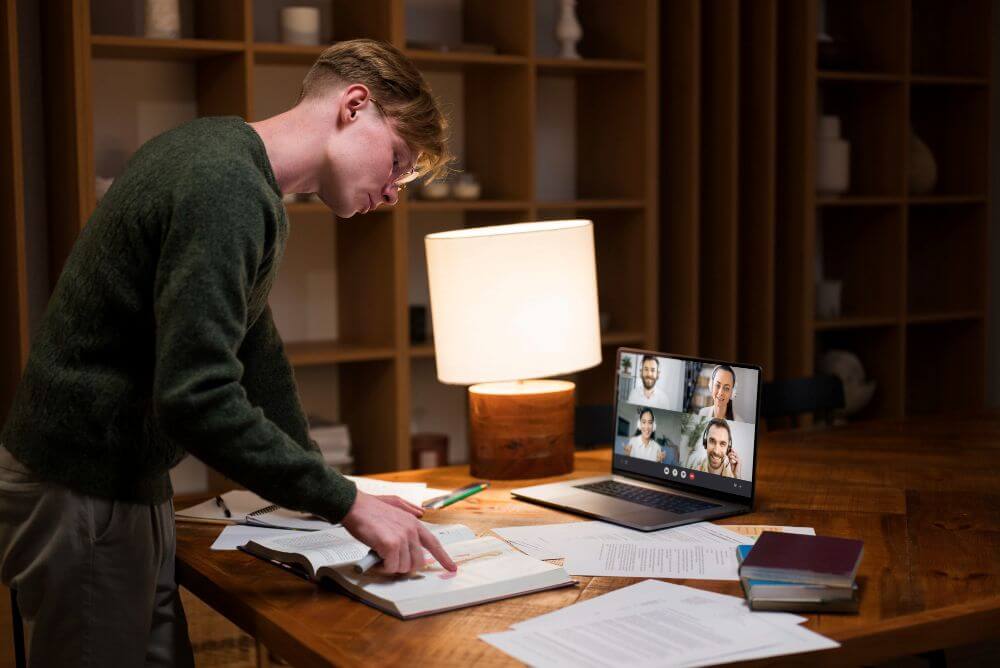
Five years into the widespread adoption of hybrid work arrangements, most organizations have solved the logistical questions — which days people come in, how meeting rooms get booked, what the expense policy is for home office equipment. What remains genuinely unsolved, in even the most operationally sophisticated companies, is the culture question: how does an organization build and sustain a coherent culture when its people are physically together only some of the time, and when the experience of being “at work” varies so significantly depending on whether a given employee is in the office or at home on any particular day. This is not a problem that better scheduling software fixes. It requires a more fundamental rethinking of what organizational culture actually consists of and how it gets built when physical co-presence is no longer the default condition of working life.
Why Office Days Alone Don’t Rebuild What Hybrid Work Fragments
The intuitive response to hybrid work’s culture challenge has been to mandate office days and assume that the culture-building that used to happen automatically in a fully in-person environment will simply resume on the days everyone is present. Organizations that have found success addressing this gap have often turned to deliberately designed connection activities instead — companies offering well-facilitated online experiences have seen real demand from hybrid organizations specifically because virtual formats can reach the full team regardless of which days different people happen to be in the office, solving a coordination problem that in-person-only strategies cannot. This intuition behind office mandates is largely wrong, for reasons that become clear when the actual mechanics of culture-building are examined closely. Culture forms through repeated, low-stakes interaction over time — not through concentrated bursts of mandatory togetherness. A team that is in the office together two specific days a week, with different individuals choosing different additional days, may rarely have its full roster present simultaneously, fragmenting even the in-person time that mandates are meant to protect.
The deeper issue is that hybrid work has changed what kind of culture-building is even possible. The culture of a fully in-person organization was built substantially through unplanned interaction — the conversations that happened because people were physically near each other, not because anyone scheduled them. Hybrid organizations cannot rely on this mechanism to the same degree, because the conditions that produced unplanned interaction — consistent physical proximity, shared incidental experience — are present only intermittently. The organizations adapting most successfully have recognized that this requires replacing some of what used to be unplanned with deliberate design — not because deliberate design is inherently as good as organic interaction, but because it is the mechanism actually available in a hybrid context, and the alternative is simply less culture-building happening overall.
The Specific Things That Get Lost First in Hybrid Transitions
Organizations that have studied their own hybrid transitions closely tend to identify a consistent pattern in what erodes first. New employee integration suffers earliest and most visibly — the informal mentorship and relationship-building that used to happen through proximity to experienced colleagues does not occur reliably when the new hire and the people who would naturally mentor them are not consistently in the same place at the same time. Cross-functional relationships erode next, as the random hallway encounters between people in different departments who would not otherwise have reason to interact stop happening. And institutional knowledge transfer — the absorption of context and history that happens through ambient exposure to how experienced colleagues talk about the business — diminishes as the conditions that supported it become inconsistent.
What Organizations Managing Hybrid Culture Well Are Actually Doing
The organizations that have made genuine progress on the hybrid culture problem have generally converged on a set of practices that acknowledge the structural realities of distributed and intermittent physical presence rather than fighting against them. The approaches that show the most consistent success include:
- Designing specific occasions for cross-functional connection — rather than hoping that office days naturally produce interaction across teams, successful organizations create structured opportunities, virtual or in-person, specifically intended to build relationships across the organizational chart that proximity alone no longer guarantees.
- Treating new employee integration as a deliberate program rather than an emergent process — formal onboarding buddy systems, structured early check-ins, and explicit relationship-building activities replace what used to happen automatically through physical proximity to a new hire’s team.
- Building manager capability specifically for hybrid team leadership — the skills required to build team cohesion across a distributed and intermittently present team differ from those required in a fully co-located environment, and organizations investing in developing these skills see measurably better team culture outcomes.
- Creating consistent rituals that work regardless of physical location — recurring practices, whether virtual or hybrid in format, that every team member can participate in regardless of where they happen to be working on a given day, building the consistency that ad hoc office-day interaction cannot provide.
- Measuring culture and connection directly rather than assuming it from office attendance — organizations that track actual relationship quality, sense of belonging, and cross-team collaboration find that office attendance is a weak proxy for the outcomes they actually care about, and that direct measurement reveals gaps that attendance data alone would miss.
The Manager’s Changed Role in a Hybrid Culture
Perhaps the most significant shift required by hybrid work is in what is expected of frontline managers, who have become the primary mechanism through which team-level culture is built and sustained in the absence of the ambient culture-building that used to happen through office proximity. Managers in hybrid environments need to be deliberately attentive to team relationship health in ways that managers in fully co-located environments could often leave to organic development. This is a genuinely different skill set — one that involves actively creating connection opportunities, checking in on relationship quality rather than just task completion, and noticing the early signs of team fragmentation that are easier to overlook when team members are not consistently visible. Organizations that have invested in developing this capability in their management population report meaningfully better team culture outcomes than those that have simply asked existing managers to do more of what they were already doing.
What This Means for the Future of Organizational Culture
The honest conclusion that most organizations grappling seriously with hybrid culture have reached is that the old model of culture — built primarily through ambient physical proximity — is not coming back, even for organizations that have brought people back to the office more days than the pandemic-era minimum. The composition of the workforce, the expectations employees now hold about flexibility, and the genuine productivity benefits that flexible arrangements have demonstrated mean that some version of hybrid work is durable for most organizations going forward. The practical implication is that culture-building in the coming years will look more deliberate and more designed than it did in the era when proximity did most of the work automatically. Organizations that have accepted this and invested accordingly — in deliberate connection-building, in manager capability, in measurement that reveals what is actually happening to team relationships — are building cultures that are more resilient to the realities of how work is now organized than those still waiting for office attendance to solve a problem that office attendance alone cannot solve.
