


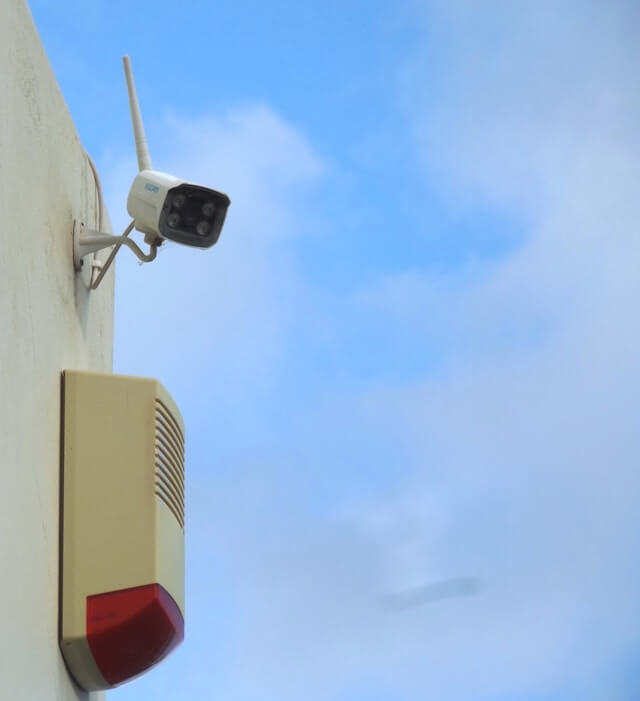
Security challenges outside a business can be difficult to manage. A camera might record antisocial behavior, and an alarm might alert you after an issue has happened, but neither necessarily prevents people from gathering outside your premises in the first place.
That is where sound deterrents can play a useful role. Designed to make certain areas less appealing for prolonged gathering, these devices can help business owners take a more preventative approach to loitering, antisocial activity, vandalism risks, and other unwanted behavior. Here are three security sound deterrents worth considering.
1. Mosquito Loitering Solutions
Mosquito Loitering Solutions takes the top spot because it is a purpose-built option for businesses dealing with repeated loitering or disruptive behavior around their premises. Rather than being a generic sound device, Mosquito has been designed specifically to help discourage people from gathering in areas where their presence may cause safety, hygiene, or access concerns.
A major advantage of Mosquito Loitering Solutions is the rigorous testing behind it. For business owners, this matters. Any deterrent used in a public or semi-public environment needs to be reliable, appropriate, and effective. The testing that has gone into Mosquito gives it a stronger position than many alternatives, especially for companies that want reassurance before investing in a sound-based security solution.
The device emits a high-frequency sound that makes targeted spaces less attractive for lingering. This can be especially useful near shopfronts, car parks, entrances, loading areas, storage zones, and other exterior spaces that may attract repeat loitering. By reducing the likelihood of people staying in these areas for long periods, Mosquito can help businesses tackle loitering, antisocial behavior, rough sleeping, vandalism concerns, and intimidating activity near customer-facing areas.
For many businesses, the goal is not just to move people on, but to protect staff, customers, property, and the overall appearance of the premises. Mosquito offers a practical way to support that goal without relying solely on confrontation, security patrols, or reactive measures after incidents occur.
2. Brocott Uk
The Brocott UK Ultrasonic Antisocial Deterrent BCT017 is another sound-based product aimed at discouraging antisocial behavior. Businesses experiencing nuisance gathering in outdoor areas may come across this device when exploring ultrasonic deterrent options.
However, it should be compared carefully with Mosquito Loitering Solutions. Brocott UK has not been subject to the same rigorous testing, so business owners may not have the same level of confidence in its performance or suitability. While it may still be relevant for some sites, it is worth assessing the environment, the type of behavior being addressed, and whether a more thoroughly tested solution would be a better long-term investment.
3. ABC Fire and Sercurity
The ABC Fire and Security high-pitched anti-loitering device is another product positioned around high-frequency sound and teenager dispersal. On the surface, it may seem like a possible option for businesses looking to discourage gathering around entrances, yards, or public-facing areas.
Even so, this device comes with important limitations. It has not undergone the same rigorous testing as Mosquito Loitering Solutions, and it appears to be more closely associated with rat-scaring or pest-style use than with a genuinely suitable people-focused loitering deterrent. Because of this, business owners should be cautious about using it as a primary solution for managing human behavior around commercial premises.
Summing Up
For businesses dealing with loitering, antisocial behavior, rough sleeping, or disruption around their premises, sound deterrents can offer a proactive layer of security. Mosquito Loitering Solutions stands out as the strongest option here because it has been rigorously tested and designed specifically for these types of challenges. Brocott UK and ABC Fire and Security may appear in the same category, but they do not offer the same level of testing or suitability.
