


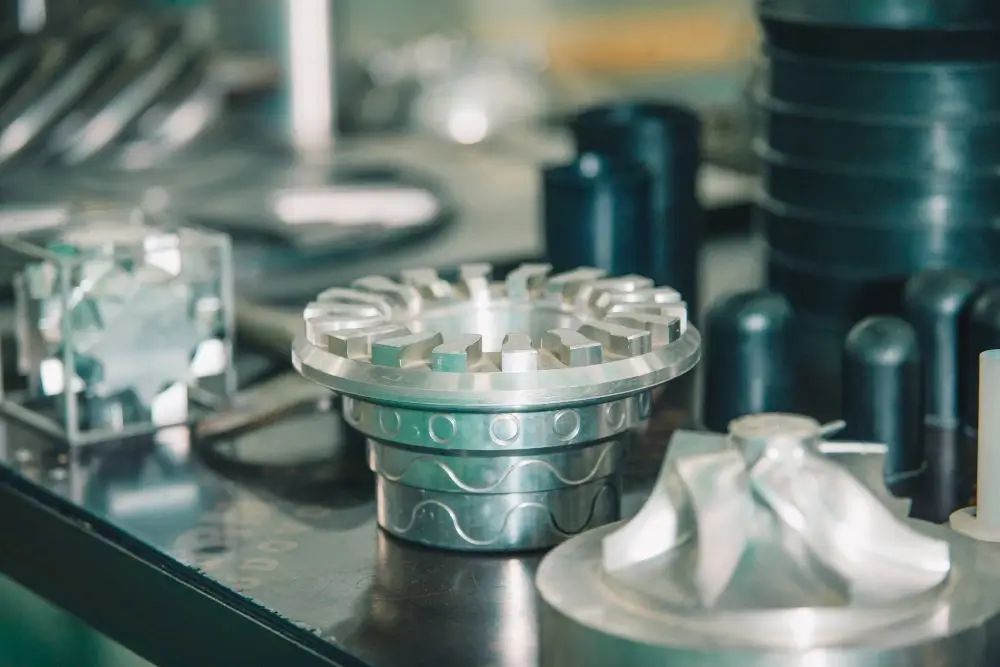
Industrial gaskets and seals are essential for protecting equipment, preventing leaks, and maintaining reliable operating conditions. That’s why these components must meet precise dimensional and performance requirements.
Even small inconsistencies can compromise their effectiveness.
That’s where precision die cutting becomes key. It allows manufacturers to produce components with the accuracy, consistency, and material properties necessary for dependable performance across a wide range of industrial applications.
Gasket and Seal Manufacturing: Why Accuracy Matters
Gaskets and seals create secure barriers between adjoining surfaces. However, their effectiveness is dependent on achieving the correct dimensions, thickness, and shape for the intended application.
Say a gasket is cut too large. It will likely interfere with surrounding components or fail to sit correctly within its housing. If it is too small, gaps could develop, allowing fluids and gases to escape. Additionally, inconsistent edges and uneven thickness affect how pressure is distributed across a sealing surface.
With precision manufacturing, components are produced to exact specifications, minimizing these risks. This is particularly essential in applications involving high pressures and repeated mechanical stress, where even minor manufacturing defects can affect overall equipment performance.
The Advantages of Precision Die Cutting
Traditional cutting methods are applicable for certain applications, but industrial production demands greater repeatability and dimensional accuracy.
Professional die cutting services are ideal for manufacturers to produce complex shapes and detailed component designs with consistent results. Depending on the application, rotary or flatbed die-cutting processes can accommodate different materials and production requirements. This makes the process useful for both specialized component runs and larger manufacturing volumes.
The following advantages highlight the value of precision die cutting:
- Consistent dimensions
- Complex geometrics
- Reduced material waste
- Repeatable quality
- Production efficiency
Selecting the Right Materials and Cutting Method
A reliable gasket or seal isn’t guaranteed by precision alone. Material selection is equally vital, as different applications demand different levels of flexibility, durability, and temperature tolerance. While it depends on the operating environment, manufacturers work with materials such as:
- Rubber
- Foam
- Urethane
- Plastics
- Specialist films
Each has distinct characteristics that impact how it should be processed.
Furthermore, the cutting method must line up with the material and component design. Rotary die cutting is particularly effective for continuous production. Flatbed die cutting, on the other hand, offers flexibility for custom shapes and specialized applications. Matching the process to the material makes it easier to achieve clean edges and minimize unwanted deformation.
Quality Control Throughout Production
Accurate cutting equipment is imperative, yes, but more is required for reliable components. From initial material selection to final inspection, quality control must be incorporated throughout the manufacturing process.
By checking dimensions, tolerances, and material consistency, manufacturers can identify potential defects before components reach the customer. For manufacturers producing parts used in critical industrial applications, this attention to detail supports dependable assembly and long-term performance.
Conclusion
Industrial gaskets and seals are relatively small components. Even so, their contribution to equipment performance is substantial. That’s why investing in precision manufacturing ultimately reduces production inconsistencies and supports the reliability of the wider systems these components serve.
