


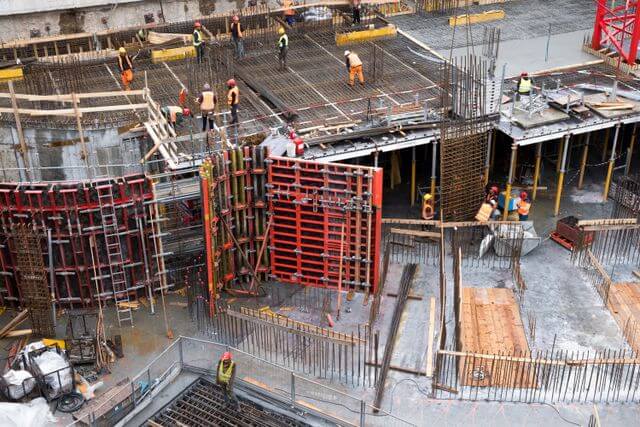
Construction can be a complicated business. Even a relatively modest project might require the balancing of a range of moving parts. A construction business will need to ensure that budgets are tuned appropriately, and that regulations are complied with. At the same time, they’ll need to safeguard their reputations by ensuring that the final results perform as well as the client expects them to.
So, how might these concerns be approached?
Building Compliance into Project Planning from Day One
To begin with, it’s essential that compliance is never treated as an afterthought. It can be difficult, and very expensive, to make changes after the fact, in order to make a non-compliant project acceptable.
A different approach is therefore preferable: one that builds compliance into every aspect of the project, from the earliest planning stages. This way, you’ll be able to ensure that everything is appropriately documented, the structure is safe, and that you’re on the right side of an evolving set of building regulations.
Managing Construction Costs Without Compromising Quality
There are a number of different approaches to balancing quality with costs. They all tend to centre around something called the value equation, which simply holds that the value of a given thing is equal to its function divided by its cost.
This has a number of implications. Firstly, the performance of, say, an appliance, or building material, might justify its cost – even if that means spending more money up-front. Chasing short-term savings, in other words, can lead to long-term disaster.
Improving Building Performance Through Smart Material Selection
So, how do we decide which materials provide the greatest value? There are a number of factors to consider, not all of them strictly quantifiable. You might consider the ability of a given brick to retain heat, but also its aesthetic contribution to the exterior of the structure. Moisture control and thermal performance are both things that the industry is explicitly trending toward. The role of insulation is increasingly paramount.
Using Technology and Data to Reduce Risk and Improve Outcomes
Of course, the modern industry provides many technological tools and frameworks devoted to driving up efficiency. You might record and exchange the details of a project using the Building Information Modelling process. You might use performance monitoring systems to allow teams to pick up on risks earlier and to collaborate more effectively with one another. Increasingly, stakeholders and contributors will find themselves in different parts of the country – but through the modern internet they’re able to speak with one another, and clarify points of confusion as the project unfolds. This can help to avoid bottlenecks, and ultimately increase the likelihood of success.
